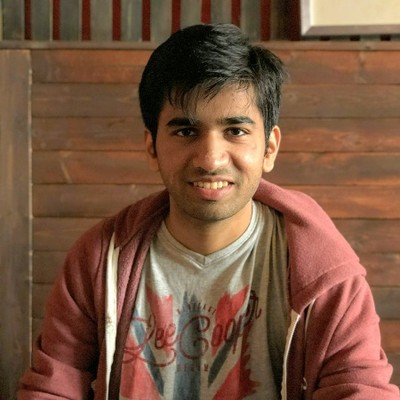
Prafulla Dhariwal
Technical Fellow at OpenAI
San Francisco, California, United States



Summary
🤩
Rockstar🎓
Top SchoolPrafulla Dhariwal is a Technical Fellow at OpenAI with 12 years of experience building and scaling generative models and multimodal systems. He rose through research roles to lead multimodal efforts and now sits in a senior technical leadership position, blending hands-on ML engineering with strategic product direction. His open-source contributions include significant engineering improvements to high-profile generative projects like OpenAI Jukebox and Glow, where he optimized sampling, data pipelines, and training/inference workflows. Trained at MIT in computer science and mathematics, he combines a strong theoretical foundation with practical engineering—evident in work that improves model usability and maintainability rather than just novel algorithms. Colleagues rely on him for bridging deep research insights into production-ready systems across audio and image generative domains.
 12 years of coding experience
 8 years of employment as a software developer
 Bachelors Computer Science Mathematics, Bachelors Computer Science Mathematics at Massachusetts Institute of Technology
Github Skills (15)
audio10
generative-model10
pytorch10
transformer10
data-loading10
machine-learning10
deep-learning10
trainings10
tensorflow10
python10
modeling10
music9
inference9
computer-vision9
paper8
Programming languages (2)
Github contributions (5)
openai/glow
Jul 2018 - Nov 2020
Code for reproducing results in "Glow: Generative Flow with Invertible 1x1 Convolutions"
Role in this project: ML Engineer
ML EngineerContributions:25 commits, 1 PR, 16 pushes in 2 years 4 months
Contributions summary:Prafulla primarily focused on improving the data loading and model training processes for the Glow generative model. They simplified data loaders, added features to the README, and fixed import statements. Additionally, the user made code modifications related to inference mode, including functions for encoding and decoding, enhancing the model's usability. They also integrated a simpler train/test logger, streamlining the training and evaluation pipeline.
pytorchinvertible-1x1-convolutionsconvolutionsglowdeep-learning
openai/jukebox
Apr 2020 - Nov 2020
Code for the paper "Jukebox: A Generative Model for Music"
Role in this project:ML Engineer
ML EngineerContributions:68 commits, 12 PRs, 39 pushes in 6 months
Contributions summary:Prafulla primarily contributed to the codebase by modifying core components of the Jukebox model, including the sampling and training pipelines. They enhanced the system by adding support for flexible sample lengths and non-chunk priming lengths, demonstrating a focus on improving the sampling process. Furthermore, the user updated the code to utilize wget for downloading model assets and performed refactoring to improve code readability and efficiency, contributing to the overall maintainability of the project.
pytorchgenerative-modelaudiotransformervq-vae
Find and Hire Top DevelopersWe’ve analyzed the programming source code of over 60 million software developers on GitHub and scored them by 50,000 skills. Sign-up on Prog,AI to search for software developers.