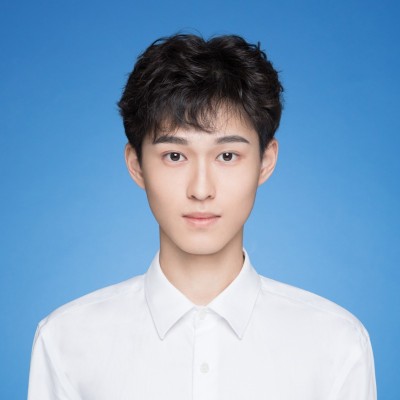
Qiaolin Yu
Maintainer at RadixArk
Mountain View, California, United States



Summary
🤩
Rockstar🎓
Top SchoolQiaolin Yu is a systems-focused software engineer and open-source maintainer with four years of experience building high-performance database and ML infrastructure. Currently based in Mountain View and finishing an MS at Cornell, Qiaolin contributes to SGLang—a fast serving framework for LLMs and VLMs—adding features like hidden-state return paths that required CUDA graph and scheduler changes. Past internships span Databricks, TiDB/PingCAP, Microsoft, and ByteDance, where they shipped components such as an automatic sharding simulator and TiFlash auto-scaling. Their work sits at the intersection of LSM-tree key-value engines, large-scale systems, and ML serving/quantization, and they are actively seeking opportunities in quant, LLM, and systems engineering. A less obvious strength is repeatedly moving research-grade storage and ML ideas into production-ready code across both academia and industry.
 4 years of coding experience
 2 years of employment as a software developer
 Bachelor of Science - BS, Computer Science, Bachelor of Science - BS, Computer Science at University of LiverpoolBachelor of Science - BS, Information and Computing Science, Bachelor of Science - BS, Information and Computing Science at Xi'an Jiaotong-Liverpool UniversityMaster of Science - MS, Computer Science and Information Systems, Master of Science - MS, Computer Science and Information Systems at Cornell UniversityMaster of Science - MS, Computer Science and Information Systems, Master of Science - MS, Computer Science and Information Systems at Cornell Tech
Github Skills (10)
pytorch10
inference10
python10
scheduler9
sampling9
deep-learning9
cuda9
transformer9
api8
apidoc8
Programming languages (7)
Github contributions (5)
sgl-project/sglang
Jan 2025 - Mar 2025
SGLang is a fast serving framework for large language models and vision language models.
Role in this project: Back-end Developer
Back-end DeveloperContributions:8 reviews, 11 PRs, 23 comments in 1 month
Contributions summary:Qiaolin's primary contribution focuses on enhancing the SGLang framework by adding features related to returning hidden states within the native API. This involved modifications to the CUDA graph runner, scheduler, and sampling batch information modules to support this functionality. Furthermore, the user refactored code to move the `return_hidden_states` parameter to the generate input and added examples demonstrating the use of hidden states with the server. This work included adjustments to test cases and the integration of hidden state functionality.
cudadeepseekdeepseek-llmdeepseek-r1deepseek-r1-zero
Qiaolin-Yu/paper-reading
Mar 2022 - Nov 2022
A list of papers I have read.
Contributions:24 commits, 14 PRs, 23 pushes in 7 months
deep-learningmachine-learning
Find and Hire Top DevelopersWe’ve analyzed the programming source code of over 60 million software developers on GitHub and scored them by 50,000 skills. Sign-up on Prog,AI to search for software developers.