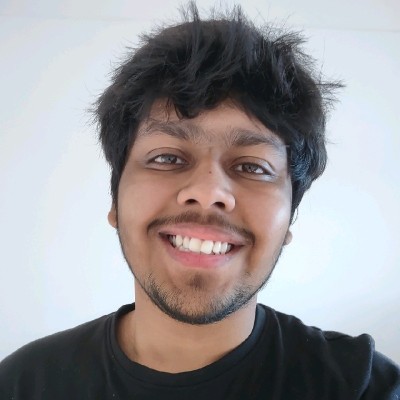
Rahul Sankar
Software Engineer 3 at Datavant
New York, New York, United States



Summary
🤩
Rockstar🎓
Top SchoolRahul Sankar is a pragmatic software engineer with 9 years of experience, currently a Software Engineer 3 at Datavant in New York, blending frontend polish with machine learning tooling expertise. He has contributed UI improvements to the widely used Brave browser and implemented core ML functions across TensorFlow and PyTorch in the Ivy framework, demonstrating fluency across web and ML stacks. Rahul’s background includes hands-on work in SaaS infrastructure, GCP deployments, and academic teaching assistance for ML/DL courses at NYU, reflecting both production and instructional experience. He moves comfortably between shipping user-facing interfaces and adding rigor to ML primitives, a combination that helps bridge product needs with reproducible engineering.
 9 years of coding experience
 3 years of employment as a software developer
 Master of Science - MS Computer Science, Master of Science - MS Computer Science at New York UniversityHigh School Diploma, High School Diploma at Delhi Public School - KalyanpurBachelor of Technology Computer Science, Bachelor of Technology Computer Science at National Institute of Technology Karnataka
 English, Hindi, Tamil
Github Skills (19)
ivy10
pytorch10
javascript10
application-settings10
python10
ui-design10
uid10
tensorflow10
front-end-development10
appsettings10
converter9
machine-learning9
html9
deep-learning8
deeplearning-ai8
Programming languages (11)
Github contributions (5)
brave/brave-core
Apr 2021 - Aug 2021
Core engine for the Brave browser for mobile and desktop. For issues https://github.com/brave/brave-browser/issues
Role in this project: Front-end Developer
Front-end DeveloperContributions:14 reviews, 9 commits, 8 PRs in 4 months
Contributions summary:Rahul primarily focused on updating the Brave browser's UI. They modified the about page to use Brave URLs instead of Chrome URLs. Additionally, the user added and refactored UI elements related to the Wayback Machine infobar, including buttons and functionality, and they worked on the Brave search engine settings page. The user also addressed issues in the UI toolbar search field.
brave-browsermobile
unifyai/ivy
Sep 2022 - Nov 2022
Convert Machine Learning Code Between Frameworks
Role in this project:ML Engineer
ML EngineerContributions:12 reviews, 5 commits, 7 PRs in 2 months
Contributions summary:Rahul contributed to the project by implementing and testing machine learning functionalities. Their work included adding a new loss function, `mean_squared_logarithmic_error`, for the Tensorflow frontend. The user also added a new function and tests for the Torch framework, specifically the `l1_loss` function. They also added the `dstack` function to the Torch implementation. This indicates a focus on expanding the supported functionalities within the Ivy framework.
machine-learningpythontensorflowpytorchnumpy
Find and Hire Top DevelopersWe’ve analyzed the programming source code of over 60 million software developers on GitHub and scored them by 50,000 skills. Sign-up on Prog,AI to search for software developers.