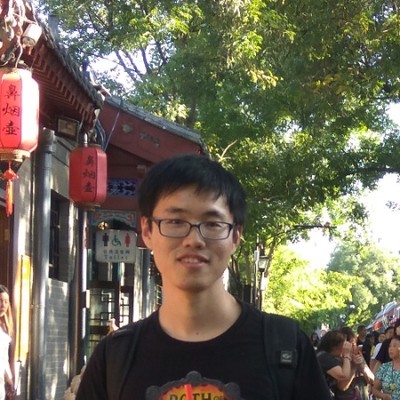
Rex Ying
Assistant Professor at Kumo.AI
New Haven, Connecticut, United States



Summary
🤩
Rockstar🎓
Top SchoolRex Ying is an assistant professor of computer science at Yale University and a Stanford PhD who specializes in graph neural networks, geometric representation learning, and large-scale graph ML with applications across knowledge graphs, recommender systems, social networks, and the natural sciences. He blends academic research with product-minded engineering as a founding engineer at Kumo.ai and through internships at DeepMind, Facebook, Pinterest, and Google, where he worked on graph nets, hierarchical models, and large-scale recommendation and de-biasing pipelines. Rex maintains active open-source work—such as a GNN model explainer and contributions to the influential GraphSAGE project—demonstrating a strong focus on model interpretability and practical evaluation. He recruits PhD students and postdocs interested in relational ML and is based in New Haven, bringing over a decade of experience that spans both theoretical advances and production-ready systems.
 11 years of coding experience
 Bachelor of Science (BS), CS, Math, 3.97 / 4.0, Bachelor of Science (BS), CS, Math, 3.97 / 4.0 at Duke UniversityDoctor of Philosophy (PhD), Computer Science, Doctor of Philosophy (PhD), Computer Science at Stanford University
 Chinese, Italian
Stackoverflow
1reputation
0reached
0answers
0questions

Github Skills (14)
machine-learning10
eval10
pytorch10
tensorflow10
graph-neural-network10
python10
evaluation10
gnn10
modeling9
data-analysis9
scikit-learn9
trainings9
scikit9
tensorboard7
Programming languages (5)
Github contributions (5)
RexYing/gnn-model-explainer
Dec 2018 - Jun 2020
gnn explainer
Role in this project: ML Engineer
ML EngineerContributions:88 commits, 1 PR, 2 pushes in 1 year 6 months
Contributions summary:Rex appears to be developing and refining a GNN-based model explainer. Their commits primarily focus on the implementation and modification of model architectures, including graph convolutional layers and attention mechanisms, within the context of a GNN explainer framework. The user's work involves modifying the base model and incorporating aspects like feature masking, demonstrating a focus on interpreting and explaining the model's behavior. They also made changes to training and evaluation scripts, indicating a role in model training and monitoring.
explainergnn
williamleif/GraphSAGE
Oct 2017 - Jul 2018
Representation learning on large graphs using stochastic graph convolutions.
Role in this project:ML Engineer
ML EngineerContributions:8 commits, 3 PRs, 7 pushes in 9 months
Contributions summary:Rex primarily focused on the evaluation and training processes for Protein-Protein Interaction (PPI) tasks within a graph representation learning context. They modified the existing evaluation scripts to assess model performance, including adding F1 score calculations and logistic regression baselines. The commits also incorporate modifications to the core training and prediction modules (graphsage/minibatch.py, graphsage/unsupervised_train.py, and graphsage/prediction.py), including loss functions and minibatch handling. This includes adjustments to loss computations and the incorporation of features and training data.
representationautoencodergraph-convolutional-networksconvolutionsdeep-learning
Find and Hire Top DevelopersWe’ve analyzed the programming source code of over 60 million software developers on GitHub and scored them by 50,000 skills. Sign-up on Prog,AI to search for software developers.