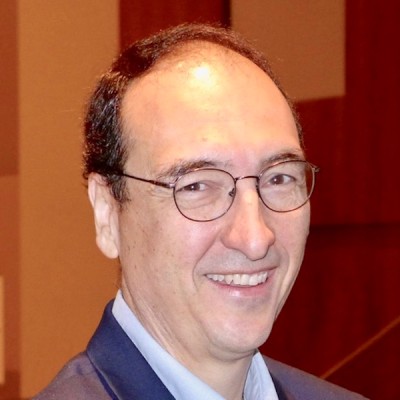
Richard Murray
Professor at Schmidt Sciences
Pasadena, California, United States



Summary
🤩
Rockstar🎓
Top SchoolRichard Murray is a professor and control systems researcher with 17+ years of professional experience and a decades-long tenure at Caltech focused on feedback and control for networked systems spanning aerospace, autonomy, multi-agent systems, and synthetic biology. He blends deep academic leadership—having chaired major Caltech divisions and co-founded a cell-free biosensing startup—with hands-on engineering, contributing to open-source tools like the Python Control Systems Library to visualize transfer functions and responses. His work bridges theory and practice, from designing synthetic cells to verification and testing of safety-critical systems, and he serves on multiple advisory boards and research institutes shaping defense and biotech policy. Based in Pasadena, he pairs a Berkeley PhD in EECS with a knack for translating control theory into deployable systems and compelling educational tools.
 18 years of coding experience
 16 years of employment as a software developer
 PhD, Electrical Engineering and Computer Sciences, PhD, Electrical Engineering and Computer Sciences at University of California, BerkeleyCalifornia Institute of Technology
Github Skills (3)
control-systems10
front-end-development10
python10
Programming languages (12)
Github contributions (5)
python-control/python-control
Dec 2009 - Dec 2022
The Python Control Systems Library is a Python module that implements basic operations for analysis and design of feedback control systems.
Role in this project: Back-end Developer
Back-end DeveloperContributions:14 releases, 183 reviews, 772 commits in 13 years 2 months
Contributions summary:Richard contributed to the development of a simple GUI application, adding code to visualize transfer function effects using Bode, Nyquist, and step response visualizations. This included the addition of a new example and updates to the code for the transfer function class, ensuring its compatibility. The user also updated the documentation with various edits and fixes to the code blocks.
control-systemspythonpython-modules
murrayrm/fbs2e-python
Jun 2021 - May 2022
FBS2e examples in Python
Contributions:26 commits, 39 pushes, 1 branch in 11 months
python
Find and Hire Top DevelopersWe’ve analyzed the programming source code of over 60 million software developers on GitHub and scored them by 50,000 skills. Sign-up on Prog,AI to search for software developers.