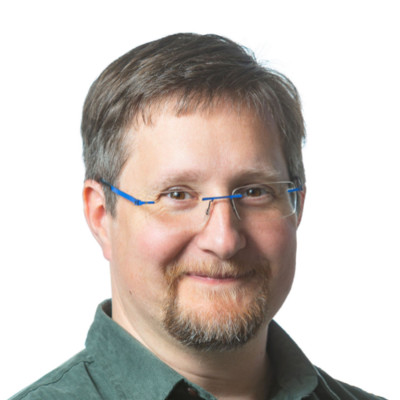
Rob Earhart
Software Engineer at Tensorlake
Seattle, Washington, United States



Summary
🤩
Rockstar🎓
Top SchoolRob Earhart is a systems-focused software engineer with 11+ years building operating systems, virtual machines, compilers, distributed systems, and ML infrastructure, currently driving reliable distributed AI systems at Tensorlake. He combines low-level expertise from NT kernel and Hyper-V work at Microsoft with cloud-scale VM and distributed-systems experience from Google and deep-learning compiler and runtime work at Vertex and Intel Movidius. Pragmatic about product-driven engineering, he blends research and implementation by designing engineering projects to answer open questions and deliver usable features. As a manager and technical lead he prioritizes unblocking teams through thoughtful tasking, architecture, testing, and skills growth while cultivating psychological safety and conflict-resolution skills. An active contributor to open-source ML runtimes (notably PlaidML and nGraph backends), he has driven scheduler and backend optimizations that improve performance across hardware targets.
 11 years of coding experience
 29 years of employment as a software developer
 B.S. Math and Computer Science, B.S. Math and Computer Science at Carnegie Mellon University
 English
Stackoverflow
1reputation
0reached
0answers
0questions

Github Skills (12)
scheduling10
compiler-design10
c-language10
deep-learning10
backend10
cprogramming-language10
plaidml10
back-end-development10
algorithms9
architecture8
architectures8
tensorflow6
Programming languages (6)
Github contributions (5)
plaidml/plaidml
Nov 2017 - Nov 2020
PlaidML is a framework for making deep learning work everywhere.
Role in this project: Backend Engineer
Backend EngineerContributions:134 reviews, 452 commits, 88 PRs in 3 years
Contributions summary:Rob's commits primarily involve refactoring the PlaidML scheduler logic. The user modified the `tile/platform/local_machine/scheduler.cc` file, suggesting improvements to the program's scheduling algorithms. The changes focus on dependency management and optimizing the flow of operations within the scheduler, improving the performance and efficiency of deep learning models. The user also made changes in `tile/lang/emitc.cc` and associated test files indicating additional code improvements.
deep-learningplaidml
NervanaSystems/ngraph
Oct 2018 - Jul 2019
nGraph has moved to OpenVINO
Role in this project:Back-end Developer
Back-end DeveloperContributions:50 commits, 44 PRs, 31 pushes in 8 months
Contributions summary:Rob primarily focused on implementing and integrating the PlaidML backend for the nGraph deep learning compiler. Their work involved adding and optimizing the PlaidML backend, including implementing batch normalization and other operations. They also made performance improvements by caching compilations and bindings. The user refactored code for better support of multiple threads and older versions of the compiler.
openvinongraphtensorflowmxnetdeep-learning
Find and Hire Top DevelopersWe’ve analyzed the programming source code of over 60 million software developers on GitHub and scored them by 50,000 skills. Sign-up on Prog,AI to search for software developers.