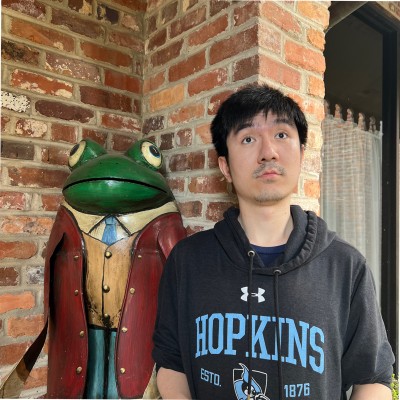
Rui Zhu
Senior Software Engineer at Netflix
Sunnyvale, California, United States



Summary
👤
Senior🎓
Top SchoolRui Zhu is a Senior Software Engineer in Sunnyvale with seven years of experience building high-performance systems at Meta and now Netflix, combining production-grade engineering with applied ML research. He holds a CS degree from Peking University and an MS in Information Security from Johns Hopkins, and was a top competitor in NOI and ACM/ICPC contests, reflecting strong algorithmic chops. Rui contributes to major open-source ML projects like PyTorch and Glow, having optimized transformer kernels, added AI-accelerator support, and improved quantized model loading for hardware accelerators. He blends low-level performance tuning and compiler/backend work with practical ML model engineering, and has a track record of fixing flaky tests and enabling AMD/HIP support—details that often go unnoticed but materially improve platform robustness.
 7 years of coding experience
 6 years of employment as a software developer
 Johns Hopkins UniversityBachelor of Science (BS), Computer Science, Bachelor of Science (BS), Computer Science at Peking University
 Chinese, English
Github Skills (18)
transformers10
pytorch10
c-language10
back-end-development10
python10
tensorrt10
glow10
machine-learning10
tensorflow10
compile10
neural-network10
network10
transformer10
tensor10
cprogramming-language10
Programming languages (2)
Github contributions (5)
pytorch/glow
May 2019 - Jun 2021
Compiler for Neural Network hardware accelerators
Role in this project: Back-end Developer & ML Engineer
Back-end Developer & ML EngineerContributions:51 commits, 6 comments in 2 years 1 month
Contributions summary:Rui contributed to the compiler for neural network hardware accelerators, specifically by modifying the Caffe2 loader to support multi Qtensor proto versions, which improved the loading of quantized tensor data. They integrated PyTorch + Glow into the predictor, enhancing the system's ability to utilize Glow for optimized model execution. Furthermore, the user added support for various operations such as floor, to, and dynamic quantized fully connected (DQFC) nodes, and improved the unit test by fixing the flaky test cases, expanding Glow's functionality to accommodate more PyTorch features.
compilerhardwareneural-network
pytorch/pytorch
Oct 2018 - Aug 2022
Tensors and Dynamic neural networks in Python with strong GPU acceleration
Role in this project:ML Engineer
ML EngineerContributions:40 commits in 3 years 10 months
Contributions summary:Rui primarily contributed to improving the performance and functionality of the PyTorch library, specifically focusing on AI accelerator optimizations and transformer-related modules. They implemented a better softmax kernel for Nested Tensor on the CPU, added a fast-path test for multi-head attention, and addressed issues related to handling odd numbers of heads in the TransformerEncoder and TransformerEncoderLayer. Additionally, they added HIP library dependencies for AMD platform support.
gpu-accelerationneural-networkpythonautogradgpu
Find and Hire Top DevelopersWe’ve analyzed the programming source code of over 60 million software developers on GitHub and scored them by 50,000 skills. Sign-up on Prog,AI to search for software developers.