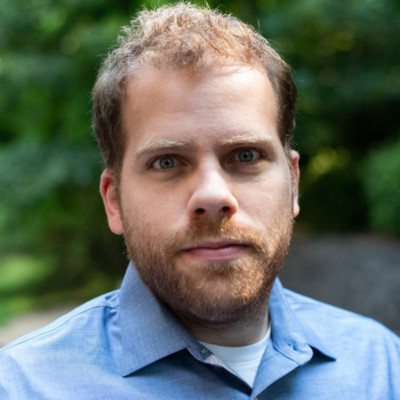
Ryan Leary
Director, AI Applications
Atlanta, Georgia, United States



Summary
🤩
Rockstar🎓
Top SchoolRyan Leary is a Director of AI Applications at NVIDIA with 12 years of experience building and deploying speech and NLP systems, combining research depth with production engineering. He has advanced NVIDIA’s applied research-to-inference pipeline, leading teams that optimize models for ONNX and TensorRT and scale generative and speech AI frameworks like NeMo. His open-source contributions span Kaldi, DeepSpeech.pytorch, and CTC decoding—demonstrating low-level CUDA/build-system expertise and practical work on beam-search decoding, model serialization, and memory-efficient inference. Previously a CTO and research scientist, he blends product-minded leadership with hands-on CUDA and PyTorch engineering, often tackling portability across CPU/GPU and aarch64 constraints. Based in Atlanta, he holds an M.S. in Electrical and Computer Engineering from Johns Hopkins and is known for turning cutting-edge speech research into robust, deployable systems.
 12 years of coding experience
 13 years of employment as a software developer
 Johns Hopkins UniversityB.S. Computer Science, B.S. Computer Science at Rensselaer Polytechnic Institute
Stackoverflow
1reputation
0reached
0answers
0questions

Github Skills (35)
continuous-deployment10
beam-search10
pytorch10
c-language10
operation10
python10
artificial-neural-networks10
tensorrt10
machine-learning10
rnn-model10
onnx10
n10
makefile10
ml-deployment10
keras10
Programming languages (12)
Github contributions (5)
parlance/ctcdecode
Jun 2017 - Jul 2020
PyTorch CTC Decoder bindings
Role in this project: Back-end Developer & ML Engineer
Back-end Developer & ML EngineerContributions:84 commits, 28 PRs, 45 pushes in 3 years 1 month
Contributions summary:Ryan contributed to adding bindings and integrating PyTorch for CTC decoding within the `ctcdecode` repository. Their work involved modifying core C++ files to interface with PyTorch tensors and implement the CTC beam search algorithm. Additionally, they added functionality for sequence length handling and implemented temporary calls for PyTorch to CTC decode. Further modifications refactored the extension structure and addressed minor bugs.
pytorchmachine-learningctcctc-lossbeam-search
SeanNaren/deepspeech.pytorch
May 2017 - Oct 2018
Speech Recognition using DeepSpeech2.
Role in this project:ML Engineer
ML EngineerContributions:1 release, 41 commits, 22 PRs in 1 year 5 months
Contributions summary:Ryan primarily focused on enhancing the DeepSpeech.pytorch project, which involves speech recognition using deep learning. Their contributions included fixing model saving and loading mechanisms to support different RNN types, ensuring portability between CPU and GPU, and refactoring model serialization. The user also integrated beam search decoding with language model support, and added utility scripts to improve the model's functionality and usability. Additionally, they optimized the code for memory efficiency.
speech-recognition
Find and Hire Top DevelopersWe’ve analyzed the programming source code of over 60 million software developers on GitHub and scored them by 50,000 skills. Sign-up on Prog,AI to search for software developers.