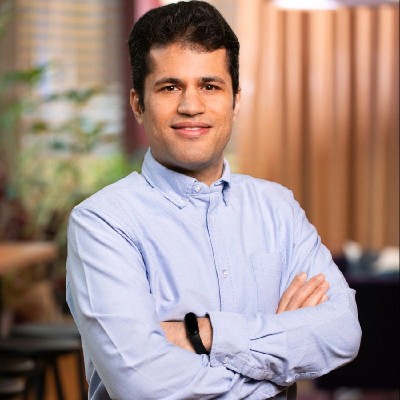
Saeed Salehi
Associate Professor
Linköping, Sweden



Summary
🤩
Rockstar🎓
Top SchoolSaeed Salehi is an associate professor and researcher with 7 years of experience at the intersection of computational fluid dynamics and data-driven modeling, currently based in Linköping. He combines machine learning with high-fidelity, physics-based simulations—particularly OpenFOAM—to advance prediction and control of complex turbomachinery flows. His work spans development of advanced numerical methods and open-source CFD tools, and he has a track record of translating research into industrial projects through roles at Chalmers and Chalmers Industriteknik. Beyond fluids, Saeed contributes to educational open-source projects in computational neuroscience and deep learning, reinforcing his interest in interdisciplinary ML applications. He holds a PhD in Mechanical Engineering from the University of Tehran and completed a diploma in university teaching at Chalmers, reflecting a commitment to both rigorous research and effective scientific communication.
 7 years of coding experience
 6 years of employment as a software developer
 Doctor of Philosophy - PhD, Mechanical Engineering, Doctor of Philosophy - PhD, Mechanical Engineering at University of TehranDiploma in Teaching and Learning in Higher Education, Diploma in Teaching and Learning in Higher Education at Chalmers University of Technology
Github Skills (12)
formatting10
jupyter-notebook10
deep-learning10
text-formatting10
regularization10
documentation10
python9
transformers7
convolutional-neural-networks7
algorithm6
recurrent-neural-networks6
reinforcement-learning6
Programming languages (4)
Github contributions (5)
NeuromatchAcademy/course-content
Jun 2020 - Jul 2021
NMA Computational Neuroscience course
Role in this project: Technical Writer
Technical WriterContributions:7 commits, 25 PRs, 31 pushes in 1 year
Contributions summary:Saeed primarily contributed to the repository by processing tutorial notebooks. This involved fixing formatting, whitespace, and comment styles to ensure the notebooks passed CI checks. Additionally, the user made minor text edits and removed comments, focusing on the clarity and correctness of the tutorials. Their work appears to improve the quality and readability of the tutorial content for the course.
neurosciencedynamic-systemspythoncomputational-neurosciencemachine-learning
NeuromatchAcademy/course-content-dl
Jun 2021 - Aug 2021
NMA deep learning course
Role in this project:ML Engineer
ML EngineerContributions:2 reviews, 22 commits, 14 PRs in 1 month
Contributions summary:Saeed's commits primarily involve modifications to a Jupyter Notebook related to regularization techniques in deep learning. The code changes include adding content and making minor fixes within a tutorial notebook focused on regularization methods. The user is likely contributing to the educational material for the deep learning course.
reinforcement-learning-algorithmstransformersdeep-learningrecurrent-neural-networkscontinual-learning
Find and Hire Top DevelopersWe’ve analyzed the programming source code of over 60 million software developers on GitHub and scored them by 50,000 skills. Sign-up on Prog,AI to search for software developers.