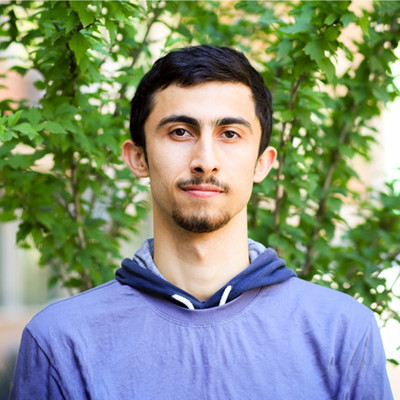
Sajjad Rahnama
Senior Member Of Technical Staff at Oracle
San Jose, California, United States



Summary
👤
Senior🎓
Top SchoolSajjad Rahnama is a Senior Member of Technical Staff at Oracle with a decade of experience focused on databases and distributed systems, blending industry work with deep academic research (MS and PhD from UC Davis). He has hands-on experience hardening and testing large-scale transactional stores—contributing fault-injection features to FoundationDB at Apple—and helped build core back-end features and persistence for the global-scale ResilientDB blockchain fabric. His background includes research and internships at Microsoft and Apple, plus system design leadership at ResilientDB, reflecting a mix of rigorous experimentation and production engineering. Based in San Jose, he combines a database-first mindset with practical tooling for observability and testability, often surfacing reliability improvements that aren't obvious until systems are stressed.
 10 years of coding experience
 4 years of employment as a software developer
 Master of Science - MS, Computer Science, Master of Science - MS, Computer Science at University of California, DavisAmirkabir University of Technology
Stackoverflow
43reputation
9kreached
0answers
1question

Github Skills (21)
c-language10
sqlite10
back-end-development10
testing10
fault-injection10
blockchain10
cprogramming-language10
distributed-database10
performance-monitoring9
smart-contracts8
cli8
command-line-interface8
distributed-ledger8
command-line8
distributed-ledger-technology8
Programming languages (9)
Github contributions (5)
apache/incubator-resilientdb
Nov 2019 - Nov 2021
Global-Scale Sustainable Blockchain Fabric
Role in this project: Back-end Developer
Back-end DeveloperContributions:2 releases, 22 commits, 6 PRs in 2 years
Contributions summary:Sajjad primarily contributed to the back-end development of the resilientdb project. They implemented features related to statistics tracking, including collecting and displaying various performance metrics like transaction counts, run times, and message queue statistics. The user also introduced SQLite support, enabling the persistence of data, and integrated smart contract functionality, showing a focus on the core functionality and data management aspects of the blockchain fabric. Additionally, they were involved in fixing docker scripts and configuration files.
scalablefabricconsensusblockchainpermissioned-blockchain
apple/foundationdb
Jul 2021 - Aug 2021
FoundationDB - the open source, distributed, transactional key-value store
Role in this project:Back-end Developer
Back-end DeveloperContributions:3 reviews, 17 commits, 5 PRs in 26 days
Contributions summary:Sajjad's contributions primarily involve modifying and extending functionality related to fault injection within the FoundationDB codebase. The changes include the addition of options and conditional logic to enable or disable fault injection, and adapting the build and test harness to utilize these features. The user also made updates to several files, including core server components and test harnesses, to incorporate the fault injection mechanisms. These changes are likely intended to improve the system's robustness and testability.
bigtabletransactionaldistributed-databasefoundationdbdatabase
Find and Hire Top DevelopersWe’ve analyzed the programming source code of over 60 million software developers on GitHub and scored them by 50,000 skills. Sign-up on Prog,AI to search for software developers.