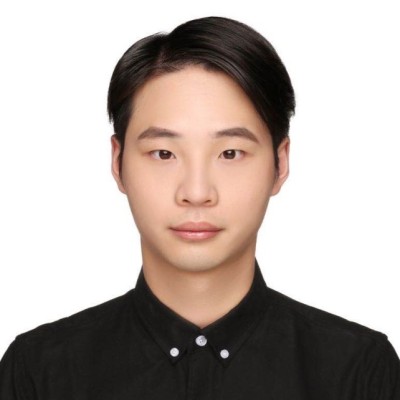
Shuheng Liu
Machine Learning Tech Lead AGI at Tensor Auto
San Jose, California, United States



Summary
👤
Senior🎓
Top SchoolShuheng Liu is a Machine Learning Tech Lead focused on AGI at AutoX with nine years of experience bridging research-grade ML and production systems from San Jose. A Harvard MEng alumnus and former teaching fellow, he leads NeuroDiffEq, an influential open-source PyTorch library for neural differential equations downloaded ~40,000 times and cited by 150 papers, whose PDE solvers and visualization tools reflect his applied math strengths. His work ranges from implementing spherical-coordinate PDE solvers and infinity boundary conditions to fine-tuning transformer-based models for real-world educational feedback, demonstrating a knack for turning theoretical methods into robust tooling. Previously a core developer at InterSystems and an ML engineer building evaluation pipelines and hallucination-detection for academic NLP, he combines deep computational science training with pragmatic engineering to ship research-backed features. Colleagues see him as someone who connects advanced numerical methods to product needs, often surfacing subtle boundary-condition and visualization improvements that accelerate research adoption.
 9 years of coding experience
 3 years of employment as a software developer
 Bachelor's degree Automation (Cybernetics), Bachelor's degree Automation (Cybernetics) at Chongqing UniversityMaster of Engineering - MEng Computational Science and Engineering, Master of Engineering - MEng Computational Science and Engineering at Harvard University
 English, Spanish, Chinese
Github Skills (8)
neural-network10
pytorch10
deep-learning10
math10
python10
scientific-computing10
modeling10
machine-learning9
Programming languages (13)
Github contributions (5)
NeuroDiffGym/neurodiffeq
Dec 2019 - Jan 2023
A library for solving differential equations using neural networks based on PyTorch, used by multiple research groups around the world, including at Harvard IACS.
Role in this project: Back-end Developer & ML Engineer
Back-end Developer & ML EngineerContributions:18 releases, 42 reviews, 718 commits in 3 years 1 month
Contributions summary:Shuheng implemented functionality for solving partial differential equations (PDEs) in spherical coordinates using neural networks based on PyTorch, focusing on steady-state PDEs and implementing boundary conditions. Their work involved creating and testing new classes for handling different boundary conditions, including the implementation and testing of infinity boundary conditions. They also developed and integrated a method to visualize the model's results to track the model's performance during training and visualize the output solutions in heatmaps.
pypidynamical-systemspde-solverodestime-series
shuheng-liu/GAN-metrics
Jul 2018 - Nov 2018
tools for evaluating and comparing performances of GAN performances w.r.t. different metrics; metric evolution at each epoch supported
Contributions:135 commits, 8 PRs, 42 pushes in 3 months
pytorchcomparingepochevolutiondeep-learning
Find and Hire Top DevelopersWe’ve analyzed the programming source code of over 60 million software developers on GitHub and scored them by 50,000 skills. Sign-up on Prog,AI to search for software developers.