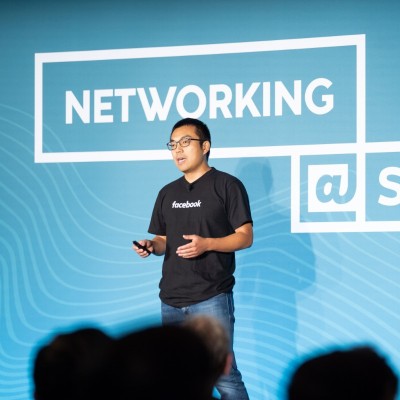
Shuqiang Zhang
Software Engineer at Meta
San Francisco Bay Area United States



Summary
🤩
Rockstar🎓
Top SchoolShuqiang Zhang is a software engineer with a decade of experience building high-performance, large-scale networking and AI infrastructure, currently driving work on Meta’s Network.AI team in the San Francisco Bay Area. His background spans industry and academia, with a Ph.D. in computer networking and prior roles designing WAN controllers for Facebook’s global backbone. He combines deep systems and networking expertise with production-grade backend and performance engineering, including contributions to the widely used PyTorch project where he stabilized distributed collectives and improved NCCL error handling and debugability. Shuqiang has a track record of hardening distributed systems under real-world workloads, adding features like periodic collective progress logging and NAN checks to aid fault diagnosis. Comfortable moving between research and product engineering, he has also held research roles at Deutsche Telekom and internships at Huawei and Ericsson. Colleagues rely on him for pragmatic fixes that improve both reliability and observability in complex, GPU-accelerated compute environments.
 10 years of coding experience
 2 years of employment as a software developer
 The Chinese University of Hong Kong (CUHK)Ph.D., Computer Networking, Ph.D., Computer Networking at University of California, DavisB.E., Communication and Information Engineering, B.E., Communication and Information Engineering at University of Electronic Science and Technology of China
Github Skills (14)
ccl10
pytorch10
error-handling10
performance-optimization10
python10
distributed-computing10
gpu9
cprogramming-language9
debug9
c-language9
debugging9
tensor8
cuda8
machine-learning7
Programming languages (2)
Github contributions (4)
pytorch/pytorch
Dec 2023 - Feb 2025
Tensors and Dynamic neural networks in Python with strong GPU acceleration
Role in this project: Back-end & Performance Engineer
Back-end & Performance EngineerContributions:244 reviews, 77 PRs, 305 pushes in 1 year 1 month
Contributions summary:Shuqiang primarily contributed to the `pytorch/pytorch` repository's distributed computing (c10d) module, focusing on improving its stability and performance. Their work included identifying and fixing a hang issue in `FileStore` and enhancing NCCL error handling, especially related to non-blocking mode. They added features like periodic logging of collective progress and an option for NAN checks during collective operations to aid in debugging and fault tolerance. Furthermore, they worked on optimizing internal processes such as the dumping of debug information to improve system reliability.
pythongpu-accelerationdeep-learninggpunumpy
shuqiangzhang/pytorch
Mar 2024 - Apr 2024
Tensors and Dynamic neural networks in Python with strong GPU acceleration
Contributions:2 pushes, 2 branches in 1 month
Find and Hire Top DevelopersWe’ve analyzed the programming source code of over 60 million software developers on GitHub and scored them by 50,000 skills. Sign-up on Prog,AI to search for software developers.