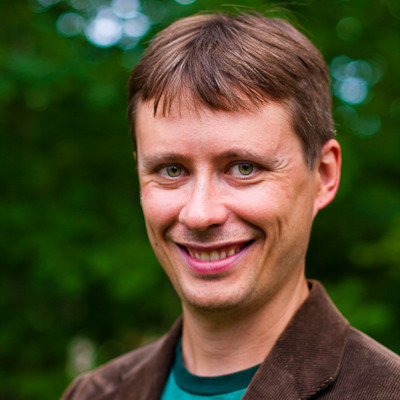
Stanislav Khrapov
Senior Machine Learning Engineer at ING Deutschland
Frankfurt, Hesse, Germany



Summary
🤩
Rockstar🎓
Top SchoolStanislav Khrapov is a Senior Machine Learning Engineer with 12 years of experience building production ML systems across finance, logistics, blockchain, and industrial IoT. He combines a PhD in financial econometrics with hands-on engineering: end-to-end model development, simulation of artificial markets and order books, cloud deployment, and real-time monitoring. As a leader he has shipped dynamic pricing, trade surveillance, and failure-detection products while cutting model training from hours to under a minute and improving accuracy by double digits. He contributes to prominent open-source projects in time-series and econometrics (sktime, arch), adding features like generalized splitters and new statistical distributions that reflect his research background. Based in Frankfurt, he bridges technical and executive stakeholders through clear communication and reproducible ML tooling, and outside work he is a committed running enthusiast.
 12 years of coding experience
 15 years of employment as a software developer
 MA, Economics, Econometrics, MA, Economics, Econometrics at Oregon State UniversityMA, Economics, Mathematical Modeling, MA, Economics, Mathematical Modeling at Novosibirsk State University (NSU)PhD, Economics, Financial Econometrics, PhD, Economics, Financial Econometrics at University of North Carolina at Chapel Hill
 English, Russian, German
Stackoverflow
1reputation
0reached
0answers
0questions

Github Skills (12)
scikit-learn10
forecasting10
pandas10
finance10
machine-learning10
time-series10
forecast10
statistical-models10
python10
data-science10
scikit10
volatility9
Programming languages (7)
Github contributions (5)
sktime/sktime
Dec 2021 - Oct 2022
A unified framework for machine learning with time series
Role in this project: Data Scientist
Data ScientistContributions:140 reviews, 10 commits, 51 PRs in 10 months
Contributions summary:Stanislav primarily contributed to the sktime library by addressing deprecation warnings related to pandas Series usage and generalizing the splitters to accept timedeltas for various arguments. They added support for lists of cutoffs in the CutoffSplitter and refactored code using the `get_window` function. Furthermore, the user fixed an issue with loading solar data and improved the documentation of the splitters.
forecastingtime-series-analysistime-series-regressiondata-sciencedeep-learning
bashtage/arch
Jun 2015 - Jul 2015
ARCH models in Python
Role in this project:Data Scientist
Data ScientistContributions:15 commits, 2 PRs in 21 days
Contributions summary:Stanislav focused on implementing and testing a new SkewStudent distribution class within the `arch` library. They defined the class, including methods for log-likelihood calculation, starting value estimation, and simulation. Further contributions involved integrating the new distribution, testing it against existing distributions, and fixing normalization errors. The primary focus was on extending the library's statistical modeling capabilities.
forecastingpythonriskrisk-analysisfinancial-econometrics
Find and Hire Top DevelopersWe’ve analyzed the programming source code of over 60 million software developers on GitHub and scored them by 50,000 skills. Sign-up on Prog,AI to search for software developers.