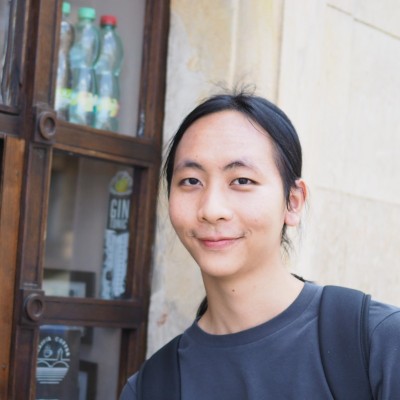
Takkasila Saichol
Research Assistant at Max-Planck-Institut für Neurobiologie des Verhaltens – caesar
Bonn, North Rhine-Westphalia, Germany



Summary
👤
Senior🎓
Top SchoolTakkasila Saichol is a computer graphics engineer and research-focused software developer with 11 years of experience building real-time rendering systems, AR pipelines, and image-processing tools. Currently a Research Assistant at the Max-Planck caesar institute, he develops software for epifluorescence tracking macroscopes, bridging advanced graphics techniques with biological imaging workflows. His background includes leading R&D for virtual environment solutions and VFX tools, optimizing texture transfer for AR e-commerce, and creating custom Nuke/Maya plugins for production pipelines. Comfortable moving between research and product delivery, he has a history of supervising rendering research projects while shipping practical tools for studios and web applications. Based in Bonn and pursuing an MS in Computer Science, he combines hands-on graphics engineering with a knack for integrating simulation and visualization into interdisciplinary domains. An uncommon strength is his cross-domain experience from geospatial social-media research to AR try-on systems, enabling creative technical solutions beyond traditional CG.
 11 years of coding experience
 4 years of employment as a software developer
 Bachelor of Engineering - BE, Computer Engineering, Bachelor of Engineering - BE, Computer Engineering at Kasetsart UniversityMaster of Science - MS, Computer Science, Master of Science - MS, Computer Science at The University of Bonn
Stackoverflow
1reputation
2kreached
0answers
1question

Github Skills (24)
inverse9
statistic9
typescript8
microsoft7
electron7
vscode-extension7
vscode7
editor7
ocean7
declaration6
renderer6
visual-studio6
visual-studio-code6
fft5
path-tracing5
Programming languages (4)
Github contributions (5)
takkasila/TwitGeoSpa
Jun 2016 - May 2018
Contributions:119 commits, 105 pushes, 1 branch in 1 year 11 months
takkasila/OceanSimulation
Nov 2015 - Mar 2016
Contributions:48 commits, 1 PR, 38 pushes in 4 months
cppself-studyoceanapproachstatistic
Find and Hire Top DevelopersWe’ve analyzed the programming source code of over 60 million software developers on GitHub and scored them by 50,000 skills. Sign-up on Prog,AI to search for software developers.