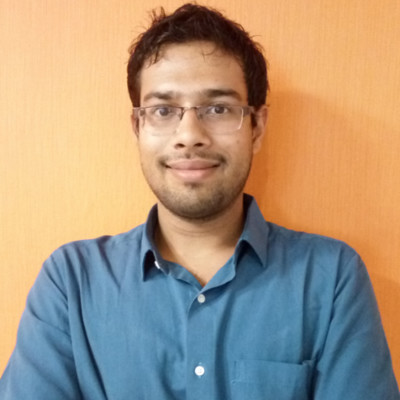
Tanmay Kulkarni
Software Engineer at Google
Mountain View, California, United States



Summary
👤
Senior🎓
Top SchoolTanmay Kulkarni is a software engineer and machine learning practitioner with a decade of experience building production ML systems and autonomous vehicle infrastructure across Google, Microsoft, and startups. Currently working on Pixel Watch AI at Google, he combines hands-on deployment experience (service availability, HTTP retry clients, monitoring) with research-grade ML skills developed during an MS at Carnegie Mellon and multiple research assistant roles. He has accelerated AV verification and automated labeling pipelines that cut verification and tagging times from hours to minutes, and has implemented model-based RL and transformer-based segmentation research. An active open-source contributor, he improved data-type handling and refutation methods in the causal-inference DoWhy library, showing a focus on robust, testable ML workflows. Based in Mountain View, he blends systems engineering, research rigor, and practical ML deployment to move models from experiment to reliable production.
 10 years of coding experience
 4 years of employment as a software developer
 BITS Pilani, Birla Institute of Technology and ScienceMaster of Science - MS, Computer Science, Master of Science - MS, Computer Science at Carnegie Mellon University
 Marathi, Hindi, English
Github Skills (9)
pandas10
python10
data-science10
causal-inference10
testing9
machine-learning9
causal9
causality9
bayesian-network3
Programming languages (9)
Github contributions (5)
py-why/dowhy
Jan 2020 - Jul 2020
DoWhy is a Python library for causal inference that supports explicit modeling and testing of causal assumptions. DoWhy is based on a unified language for causal inference, combining causal graphical models and potential outcomes frameworks.
Role in this project: Data Scientist
Data ScientistContributions:53 commits, 36 PRs, 115 comments in 6 months
Contributions summary:Tanmay primarily contributed to the data science aspects of the project, focusing on improving the handling of data types within the causal inference library. Their work involved automatically inferring and converting data types within the causal data frame, adding test cases for data input scenarios, and fixing datatype mismatches. Additionally, they added and refined documentation, and added functionality for multiple input for refutation strategies. The user also focused on the implementation and testing of refutation methods, specifically for unobserved common causes, bootstrap, subset and placebo refuters.
fairness-mlcausal-modelspythoncausalbayesian-networks
Tanmay-Kulkarni101/GranularMethodsMachineLearning
Apr 2019 - Feb 2020
Contributions:17 commits, 15 pushes, 1 branch in 10 months
Find and Hire Top DevelopersWe’ve analyzed the programming source code of over 60 million software developers on GitHub and scored them by 50,000 skills. Sign-up on Prog,AI to search for software developers.