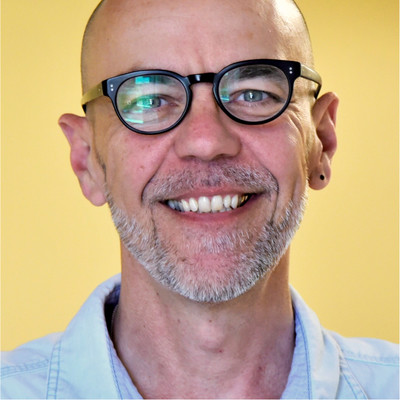
Thomas Dick
Professor at Center for Discovery and Innovation
New Jersey, United States



Summary
🤩
Rockstar🎓
Top SchoolThomas Dick is a Professor and antibiotic discovery scientist with over two decades of leadership in TB and NTM drug discovery, currently directing a fully enabled preclinical drug discovery platform at the Center for Discovery and Innovation and holding professorships at Hackensack Meridian School of Medicine and Georgetown University. He led Novartis’ Tuberculosis Drug Discovery Unit and earlier established pivotal mycobacterial biology work at A*STAR, producing influential discoveries such as the DosR dormancy regulator. With a PhD from Heidelberg and a publication record exceeding 200 papers (h-index 68), he pairs deep molecular bacteriology expertise with hands-on medicinal chemistry partnerships to advance repurposing, reengineering and de novo antibiotic programs. His lab has delivered notable translational wins—from rifamycin variants that bypass Mycobacterium abscessus resistance to synergistic oral beta-lactam regimens and the first antibiotic exploiting targeted protein degradation. Unusually for a biologist, he has contributed to computational open-source work on CFD adjoint solvers, reflecting a pragmatic cross-disciplinary engagement with algorithmic toolchains. Based in New Jersey, he combines academic rigor with industry-style program management to shepherd candidates toward preclinical development.
 10 years of coding experience
 8 years of employment as a software developer
 PhD, Molecular Bacteriology, Summa cum laude, PhD, Molecular Bacteriology, Summa cum laude at Heidelberg UniversityAbitur / A level, High School, 1.2, Abitur / A level, High School, 1.2 at Helmholtz Gymnasium Heidelberg
 English, German
Github Skills (9)
computational-fluid-dynamics10
cfengine10
c-language10
cfc10
physics10
cprogramming-language10
cfml10
open-source9
python7
Programming languages (4)
Github contributions (5)
su2code/SU2
Nov 2021 - Jan 2022
SU2: An Open-Source Suite for Multiphysics Simulation and Design
Role in this project: Back-end Developer
Back-end DeveloperContributions:19 reviews, 40 commits, 6 PRs in 2 months
Contributions summary:Thomas primarily focused on debugging and enhancing the functionality of the adjoint solver within the SU2 codebase. Their initial contribution involved fixing an issue related to the execution of the `run_filediff` function within a specific test case. Subsequently, the user implemented a Sobolev smoothing solver to refine gradient treatment, focusing on mesh and design parameter levels. This solver includes support for printing the system matrix and is intended to smooth discrete adjoint gradients. The user's work centered on improving the CFD aspects of the project.
physicsmultiphysics-simulationpythoncfdsnl-applications
thomasdick/SU2
Mar 2019 - Mar 2022
SU2: An Open-Source Suite for Multiphysics Simulation and Design
Contributions:1 PR, 143 pushes, 16 branches in 2 years 11 months
multiphysics-simulationmultiphysicssimulationsu2modeling-tool
Find and Hire Top DevelopersWe’ve analyzed the programming source code of over 60 million software developers on GitHub and scored them by 50,000 skills. Sign-up on Prog,AI to search for software developers.