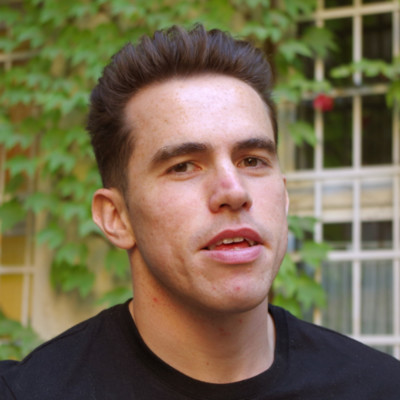
Thomas Metcalfe
Member Of Technical Staff at Black Forest Labs
Berlin, Germany


Summary
🤩
Rockstar🎓
Top SchoolThomas Metcalfe is an AI engineering leader and founder with eight years of experience building production ML systems and startups across Berlin and remote teams. He has led data science and ML engineering at Sequoia-backed Twain and co-founded consumer and mission-driven startups (vibe.social, PolarBearings), bringing NLG and human-centric AI to product. A hands-on contributor to major open-source projects like Rasa and Faker, his work improved conversational state handling and flexible data providers—skills that bridge research-grade models and robust backend systems. He hosts the largest NLP Study Group on Meetup, speaks at global conferences, and was handpicked by Sequoia’s Arc program, reflecting both community leadership and investor-grade product focus. Trained as a physicist, he blends rigorous quantitative thinking with practical engineering to ship reliable, user-facing AI features.
 8 years of coding experience
 7 years of employment as a software developer
 Master's degree, Physics, Master's degree, Physics at Durham University
 English, French, German

Stackoverflow
122reputation
8kreached
7answers
0questions

Github Skills (20)
pytest10
python10
testing10
faker10
rasa10
natural-language-processing10
nlp10
test-data9
datasets9
machine-learning9
synthetic-data9
test-generator9
unit-testing8
change-tracking7
changelist7
Programming languages (9)
Github contributions (5)
RasaHQ/rasa
Sep 2018 - Aug 2019
💬 Open source machine learning framework to automate text- and voice-based conversations: NLU, dialogue management, connect to Slack, Facebook, and more - Create chatbots and voice assistants
Role in this project: Back-end Developer & ML Engineer
Contributions:521 commits, 79 PRs, 228 pushes in 11 months
Contributions summary:Thomas focused on enhancing the functionality and accuracy of the Rasa framework. Their work included implementing and testing new features related to boolean slot management within the Rasa Core module, as well as fixing bugs. Additionally, the user improved the internal feature dimensionality to represent the state of bool slots. Their contributions show the integration and testing of different components of a machine learning model.
machine-learningnluslackvoice-assistantnlp
RasaHQ/rasa-sdk
Feb 2019 - Aug 2019
SDK for the development of custom actions for Rasa
Role in this project:Back-end Developer
Back-end DeveloperContributions:35 commits, 11 PRs, 15 pushes in 6 months
Contributions summary:Thomas primarily contributed to the `rasa-sdk` repository by implementing and modifying features related to form actions. Their work involved adding conditional logic within the form validation process and enabling form deactivation during validation. They also addressed code style issues, updated the changelog, and wrote tests to ensure the correct behavior of the form actions, particularly around the deactivation functionality. Further contributions involved enhancing the tracker with the latest input channel feature.
rasa
Find and Hire Top DevelopersWe’ve analyzed the programming source code of over 60 million software developers on GitHub and scored them by 50,000 skills. Sign-up on Prog,AI to search for software developers.