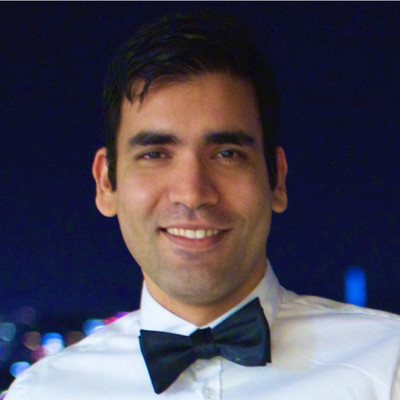
Vahid Kazemi
California, United States



Summary
🤩
Rockstar🎓
Top SchoolVahid Kazemi is an AI entrepreneur and machine learning engineer with a Ph.D. from KTH and 11 years of experience building cutting-edge systems across OpenAI, xAI, Google, Apple, and other leading labs. He has led teams and shipped production ML systems—from face tracking and visual shopping to autonomous driving simulators—and recently led research collaborations at OpenAI. Equally comfortable in research and engineering, he contributes open-source tooling for ML workflows (notably a TFRecord reader/writer with PyTorch loaders) that reflects a focus on reliable data pipelines and scalable training. Based in California, he combines deep technical rigor with product-focused delivery, and is now channeling that experience into founding a new AI company.
 11 years of coding experience
 12 years of employment as a software developer
 Doctor of Philosophy (Ph.D.), Computer Science, Doctor of Philosophy (Ph.D.), Computer Science at KTH Royal Institute of TechnologyBachelor's Degree, Computer Science, Bachelor's Degree, Computer Science at National University of Iran
 English
Stackoverflow
1reputation
222reached
0answers
1question

Github Skills (25)
pytorch10
python10
machine-learning10
data-loading10
tensorflow10
fileio10
tfrecord10
file-handling10
file-processing10
file-access10
data-set9
numpy9
datasets9
data-api9
computer-vision8
Programming languages (4)
Github contributions (5)
vahidk/tfrecord
Nov 2019 - Jun 2021
Standalone TFRecord reader/writer with PyTorch data loaders
Role in this project: Back-end Developer
Back-end DeveloperContributions:14 reviews, 29 commits, 26 PRs in 1 year 7 months
Contributions summary:Vahid primarily contributed to the development of a TFRecord reader and writer library. Their work included adding a setup.py file for package management, implementing data loading and iterating functionalities with `tfrecord_iterator` and `tfrecord_loader`, and adding a TFRecordWriter class. They also fixed multi-worker issues, optimized seeding for better performance, and addressed code related to CRC calculations. This indicates a focus on building core functionality for reading and writing TFRecord files.
pytorchdatasettfrecordreadertensorflow
vahidk/EffectiveTensorflow
Jul 2017 - Oct 2020
TensorFlow tutorials and best practices.
Role in this project:ML Engineer
ML EngineerContributions:111 commits, 14 PRs, 110 pushes in 3 years 3 months
Contributions summary:Vahid primarily focused on improving the TensorFlow-based machine learning tutorials and best practices within the repository. They made several code changes, including fixing comments, replacing `get_shape` with `shape`, and removing whitespace. The user also visualized predictions, compressed images, added datasets like CIFAR10 and CIFAR100, and switched to the dataset API, reflecting a focus on enhancing the dataset handling and the model's visualization capabilities.
deep-learningmachine-learningtensorflow-tutorialstensorflowtensorflow2
Find and Hire Top DevelopersWe’ve analyzed the programming source code of over 60 million software developers on GitHub and scored them by 50,000 skills. Sign-up on Prog,AI to search for software developers.