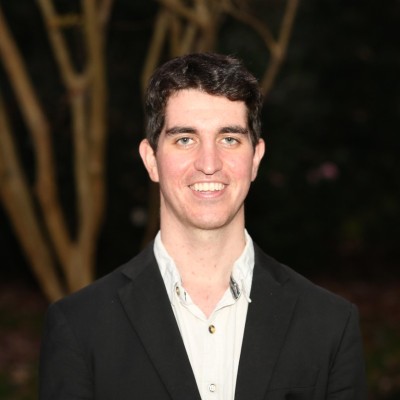
Valentin Sulzer
Co-Founder & CEO at PyBaMM
Pittsburgh, Pennsylvania, United States



Summary
🤩
Rockstar🎓
Top SchoolValentin Sulzer is a founder-engineer and CEO with nine years of experience building high-performance simulation software for batteries, currently leading Ionworks (YC S24) and continuing to drive PyBaMM as its creator and core developer. He combines deep academic grounding from a PhD at Oxford and postdoctoral work at Michigan and Carnegie Mellon with hands-on open-source engineering, having improved physics-based models, solver performance, and event-driven features in PyBaMM. Valentin has also contributed domain-aware symbolic capabilities to prominent Julia projects like ModelingToolkit.jl and Symbolics.jl, bridging equation-based modeling and practical numerical tools. Known for squeezing orders-of-magnitude speedups from reduced-order models, he pairs math-first thinking with product-focused execution to make accurate, fast, and usable simulation tools for battery engineers.
 9 years of coding experience
 2 years of employment as a software developer
 High School, International Baccalaureate, 44, High School, International Baccalaureate, 44 at King's College School WimbledonY CombinatorDoctor of Philosophy (Ph.D.), Industrially Focussed Mathematical Modelling, Doctor of Philosophy (Ph.D.), Industrially Focussed Mathematical Modelling at University of Oxford
 English, French, Spanish, Italian
Github Skills (20)
unit-testing10
symbolic-computation10
symbolic-computing10
ode10
python10
testing10
mathematics10
math10
differential-equations10
unit-test10
scientific-computing10
julia10
pde9
test-driven-design9
modeling9
Programming languages (10)
Github contributions (5)
pybamm-team/PyBaMM
Nov 2018 - Jan 2023
Fast and flexible physics-based battery models in Python
Role in this project: Back-end Developer
Back-end DeveloperContributions:17 releases, 957 reviews, 5711 commits in 4 years 3 months
Contributions summary:Valentin's commits primarily involved code changes within the "pybamm" repository, specifically focusing on modifications to battery models, including implementing and testing features related to electrode state of health (SOH). The contributions included refactoring code for better performance and stability and adding event-driven functionality. The user also worked on adjusting parameters, defining equations, and fixing tests related to the electrolyte concentration, thereby improving the accuracy and reliability of the battery models.
chemical-engineeringphysicspower-systemspythonbattery
SciML/ModelingToolkit.jl
Apr 2021 - May 2021
An acausal modeling framework for automatically parallelized scientific machine learning (SciML) in Julia. A computer algebra system for integrated symbolics for physics-informed machine learning and automated transformations of differential equations
Role in this project:Back-end Developer & Domain Expert
Back-end Developer & Domain ExpertContributions:3 reviews, 12 commits, 1 PR in 1 month
Contributions summary:Valentin's contributions primarily focused on integrating the `DomainSets.jl` library into the `ModelingToolkit.jl` framework, specifically within the context of equation-based modeling. This involved creating interfaces, adding support for new domain types such as `Ball`, and updating existing code to utilize the `DomainSets` library effectively. The user also refactored code, updated tests, and addressed deprecation warnings to maintain compatibility and improve the integration of the domain-related functionalities within the project.
sdescientific-machine-learningtransformationspartial-differential-equationsdifferential
Find and Hire Top DevelopersWe’ve analyzed the programming source code of over 60 million software developers on GitHub and scored them by 50,000 skills. Sign-up on Prog,AI to search for software developers.