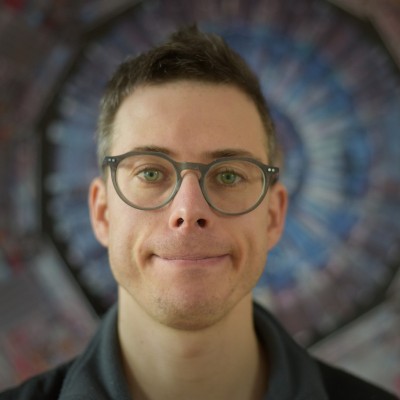
Valentin Volkl
Systems Software Engineer at CERN
Meyrin, Geneva, Switzerland



Summary
🤩
RockstarValentin Volkl is a Systems Software Engineer based in Meyrin, Geneva with 11 years of experience building and hardening infrastructure and scientific software at CERN. He has progressed from applied research fellow to systems engineering roles, bringing deep expertise in back-end development, package management, and maintainable C++ code for high-energy physics workloads. Valentin contributes to major open-source projects—notably refactoring particle-track reconstruction code in acts-project/acts and maintaining build recipes for spack—to ensure reproducible, configurable builds across complex HEP stacks. He focuses on removing brittle assumptions, improving type safety and unit testing, and resolving subtle versioning and packaging bugs that matter in production science environments. Colleagues rely on him for pragmatic, correctness-driven improvements that boost long-term maintainability and experiment accuracy.
 11 years of coding experience
Github Skills (12)
simulations10
simulation10
build-tools10
build-system10
c-language10
cmake10
cprogramming-language10
recovery10
package-management10
package10
3d-reconstruction10
fortran9
Programming languages (15)
Github contributions (5)
spack/spack
Apr 2020 - Nov 2022
A flexible package manager that supports multiple versions, configurations, platforms, and compilers.
Role in this project: Back-end Developer
Back-end DeveloperContributions:414 reviews, 177 commits, 231 PRs in 2 years 8 months
Contributions summary:Valentin primarily contributed to the development of recipes and package definitions for the `spack/spack` repository, a flexible package manager. Their contributions involved adding and updating recipes for various High Energy Physics (HEP) packages like `podio`, `dd4hep`, `Delphes`, and `fastjet`. These changes focused on versioning, configuring dependencies, and ensuring proper build environments for the described software packages. Further work addressed minor bugs related to dictionary loading and version formatting.
compilerspythonradiussplatformslinux
acts-project/acts
May 2016 - Aug 2017
Experiment-independent toolkit for (charged) particle track reconstruction in (high energy) physics experiments implemented in modern C++
Role in this project:Back-end Developer
Back-end DeveloperContributions:13 commits in 1 year 3 months
Contributions summary:Valentin primarily focused on refactoring and improving the codebase related to particle track reconstruction. Their contributions involved removing hardcoded parameters, fixing typos, and enhancing the code's structure for better maintainability. The user also addressed type issues and improved unit tests, demonstrating a commitment to code quality and correctness. These changes likely aimed at improving the accuracy and performance of the physics experiment simulation.
physics-enginephysics-experimentreconstructionphysicsparticle
Find and Hire Top DevelopersWe’ve analyzed the programming source code of over 60 million software developers on GitHub and scored them by 50,000 skills. Sign-up on Prog,AI to search for software developers.