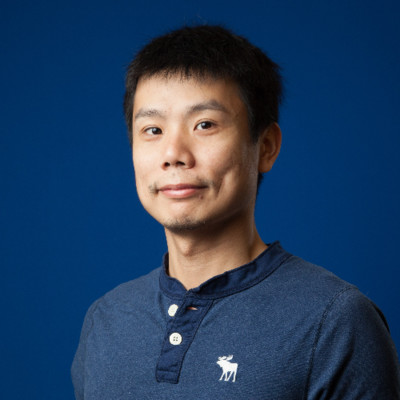
Yanping Huang
Principal Engineer at Google
Mountain View, California, United States



Summary
🤩
Rockstar🎓
Top SchoolYanping Huang is a Principal Engineer at Google with 11 years of experience building and scaling large ML systems and infrastructure, drawing on a Ph.D. from the University of Washington. She has been deeply involved in high-impact projects such as GShard, GLaM, GSPMD, GPipe and other efforts to scale giant language and translation models, with practical contributions to TensorFlow TPU and Lingvo including AmoebaNet and optimizer/distributed-op work. Her background spans research and product-focused roles across Facebook and Amazon, specializing in efficiency optimization, model-parallelism, and multilingual machine translation. Based in Mountain View, she combines deep research pedigree with hands-on engineering that bridges automatic sharding, mixture-of-experts scaling, and production TPU tooling—an uncommon blend that helps transition bleeding-edge model architectures into reliable infrastructure.
 11 years of coding experience
 1 year of employment as a software developer
 Ph.D Computer Science and Engineering, Ph.D Computer Science and Engineering at University of Washington
 English, Chinese
Github Skills (11)
model-building10
machine-learning10
tensorflow10
python10
modeling10
model-driven10
model-driven-development10
distributed-computing9
nlp8
retinanet8
object-detection7
Programming languages (3)
Github contributions (5)
tensorflow/tpu
Apr 2018 - Jan 2020
Reference models and tools for Cloud TPUs.
Role in this project: ML Engineer
ML EngineerContributions:8 commits, 5 PRs, 5 pushes in 1 year 9 months
Contributions summary:Yanping primarily contributed to the AmoebaNet model within the TensorFlow TPU repository. Their work involved merging internal changes, likely incorporating updates and improvements to the model's architecture and training pipeline. These changes included modifications to the model's parameters, optimization strategies, and data preprocessing steps. The user's commits also involved updating the RetinaNet model, suggesting a focus on object detection and related model development within the TPU environment.
cloud
tensorflow/lingvo
Oct 2018 - Oct 2022
Lingvo
Role in this project:Back-end Developer & ML Engineer
Back-end Developer & ML EngineerContributions:154 commits, 18 comments, 1 issue in 4 years 1 month
Contributions summary:Yanping contributed to the Lingvo framework by adding an RMSProp optimizer, which involved modifying the `optimizer.py` file to include the new optimizer and its parameters. Furthermore, the user implemented the `FPROP_META` method for the identity layer and exported `Send/Recv` ops, indicating involvement in lower-level framework components and potentially distributed computing aspects. Their contributions demonstrate a focus on improving optimization techniques and data transfer functionalities within the TensorFlow-based Lingvo framework, aligned with the project's topics related to distributed computing, machine learning, and NLP.
asrtranslationctcspeech-recognitiontensorflow
Find and Hire Top DevelopersWe’ve analyzed the programming source code of over 60 million software developers on GitHub and scored them by 50,000 skills. Sign-up on Prog,AI to search for software developers.