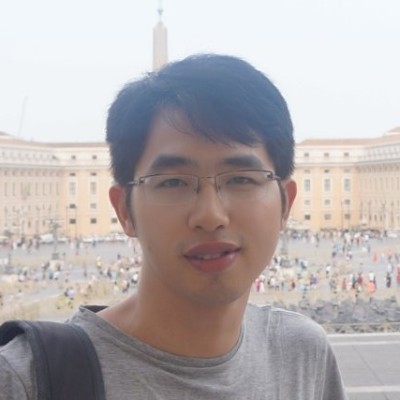
Zhenwen Dai
Co-Founder And CTO at Trent AI
United Kingdom



Summary
🤩
Rockstar🎓
Top SchoolZhenwen Dai is a machine learning leader and founder with 11 years of experience building research-driven products and teams, currently serving as Co-Founder and CTO of Trent AI in the UK. He led probabilistic ML, reinforcement learning and multi-objective optimization efforts at Spotify, scaling research into production playlist experiences and managing a research lab. His background spans industry and academia — from a PhD in Machine Learning to postdoc work at Sheffield and contributions at Amazon — giving him deep theoretical grounding and practical deployment experience. An active contributor to influential Gaussian process libraries (GPy and GPyOpt), he has handled release management, core bug fixes and extended model functionality, signaling both library stewardship and low-level numerical expertise. Colleagues know him for bridging rigorous research with product impact and for quietly improving critical tooling that other teams rely on.
 11 years of coding experience
 11 years of employment as a software developer
 Doctor of Philosophy (Ph.D.) Machine Learning, Doctor of Philosophy (Ph.D.) Machine Learning at Goethe University FrankfurtThe University of Hong Kong (HKU)Bachelor’s Degree Computer Science, Bachelor’s Degree Computer Science at Zhejiang University
Stackoverflow
1reputation
0reached
0answers
0questions

Github Skills (15)
gaussian-processes10
optimization10
model-building10
debug10
scipy10
machine-learning10
python10
modeling10
model-driven10
numpy10
model-driven-development10
testing9
gpy9
release-management8
matplotlib8
Programming languages (4)
Github contributions (5)
SheffieldML/GPyOpt
Jun 2016 - Aug 2020
Gaussian Process Optimization using GPy
Role in this project: Back-end Developer
Back-end DeveloperContributions:1 release, 30 commits, 10 PRs in 4 years 2 months
Contributions summary:Zhenwen primarily contributed to the maintenance and evolution of the GPyOpt library. Their commits include updating the setup file, which indicates involvement in package management and distribution. They also bumped the version number, showing a role in release management. Further contributions involve merging branches and fixing bugs related to the SciPy library, revealing involvement in the core codebase.
pythongpyoptimizationgaussiangaussian-process
SheffieldML/GPy
Mar 2016 - Jun 2020
Gaussian processes framework in python
Role in this project:ML Engineer
ML EngineerContributions:1 release, 63 commits, 70 PRs in 4 years 3 months
Contributions summary:Zhenwen made significant contributions to the GPy framework, primarily focused on addressing bugs and improving the implementation of various machine learning models and inference methods. Their work includes fixing issues related to full covariance matrix predictions, addressing bugs due to changes in NumPy, and updating the version requirement for matplotlib. They also deployed a new version of the project that extended the functionality of the existing machine learning model with multiple hidden layers and different activation functions. Furthermore, they made enhancements to plotting capabilities, including handling of density plots.
gaussiangaussian-processespython
Find and Hire Top DevelopersWe’ve analyzed the programming source code of over 60 million software developers on GitHub and scored them by 50,000 skills. Sign-up on Prog,AI to search for software developers.